

Meccha Chameleon

Stickman Hook

Blumgi Slime

Colorup

FNF B Sides

Doodle Champion Island

Run 3 Editor











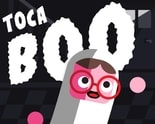

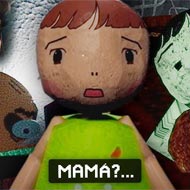





You slide straight through the nursery wall as Boo, catch the babysitter reaching for a nightlight, and flick it off before she even turns around. That’s the loop Toca Boo hands you in the first minute: you’re a small ghost girl haunting your own house, and almost everything in every room gives you a slightly different way to spook the people living there.
| Genre | Casual Simulation |
| Platform | Browser |
| Setting | Family house, nighttime |
| Status | Released |
Boo isn’t limited to walking hallways like everyone else in the house. Hold the phase ability and she slips through walls, floors, and closed doors, getting ahead of a family member before they even reach the next room. Turn translucent and she can drift past someone unnoticed, saving the scare for the moment you want it a swinging door, a flickering lamp, a chair that rocks on its own.
There’s no fail state chasing you through this, which surprises players expecting a normal hide-and-seek structure. If a family member spots you, the moment is simply spent and you try a different angle. That’s also the aspect most often flagged as a downside: without real consequences, sneaking never quite carries lasting tension, even though the trade-off is clearly intentional given the family-friendly framing.
What keeps sessions interesting instead of repetitive is how many small interactions Boo can trigger:
Chaining two or three of these against the same family member is where the fear reaction escalates, and figuring out which combo lands hardest on which character is most of the actual skill in Toca Boo.
Every room plays differently once you treat it as Boo’s territory instead of scenery. The kitchen gives you appliances to flicker and cabinets to swing open; the bathroom hands you the mirror trick, where stepping into the reflection while someone’s brushing their teeth gets one of the most reliable jump reactions in the whole game. Bedrooms hold the lamp-and-closet combo, and the attic and basement are darker spaces where a single creak goes a lot further.
Family members don’t all react the same way. Some spook easily and bail the moment something moves; others need two or three scares stacked before their fear meter tips into a real reaction. Learning those thresholds keeps players returning to rooms they’ve already cleared once.
The family cat is the one target that breaks the usual rules. Unlike the humans in the house, the cat senses Boo even while she’s translucent, so the invisibility trick that works on everyone else doesn’t fully apply once the cat’s around. Players who’ve spent real time with Toca Boo learn to route around it entirely rather than try to out-sneak it.
Most games built around scaring NPCs give you a clock, a fail condition, or a score to chase. Toca Boo has none of that, and the entire house is open from the start with no locked rooms gating progress, in line with the open, repeat-play design running through the rest of the catalog.
Because nothing is timed, younger players and anyone easing into the game can wander for as long as they like without ever feeling behind.
Completionist-minded players set their own goals instead scaring every family member in one sitting, or finding every object in a room Boo can interact with since the game won’t hand them a checklist. Toca Boo is charming and replayable in short bursts, but without a win condition it can feel thin for anyone looking for actual stakes, which is less a flaw than a design decision aimed squarely at its intended audience.
No. There’s no game over screen and no penalty for being spotted the moment simply resets and you try the scare again from a different angle. This no-fail design is standard across the Toca Boca catalog, and it’s exactly what makes Toca Boo comfortable for younger players to explore alone.
Yes, and it’s one of the more talked-about quirks of the game. Human family members can be fooled by Boo’s translucent state, but the cat reacts to her presence regardless, so sneaking past it takes different timing than sneaking past Mom, Dad, or the kids.
Toca Boo works because it trusts Boo’s toolkit phasing, invisibility, and a house full of objects to mess with to carry the whole experience without a scoreboard, and that mirror-reflection scare is usually the one players remember first.