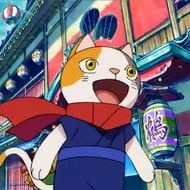
In Doodle Champion Island you start as Lucky — a small calico cat who has just arrived on Champion Island by boat — and the island immediately gives you a choice that most games don’t make explicit: you can rush straight toward the sport champions and try to dethrone all seven, or you can explore the island first, talk to everyone, find the hidden areas, and discover what Champion Island is actually about before you compete in anything. Doodle Champion Island rewards the second approach significantly more than the first, and that preference is embedded in the island’s design from the first village you enter.
Lucky and the Seven Champions
Doodle Champion Island is a browser game built around Lucky the calico cat competing against seven sport champions across the island’s dedicated venues. Each champion governs one sport and must be defeated to collect their scroll. Defeating all seven champions and their associated team challenges is the primary completion objective. The seven sports are table tennis, artistic swimming, archery, skateboarding, marathon running, rugby, and climbing — each with a distinct miniature game mechanic that functions independently.
The champions are not interchangeable in difficulty. Yama the table tennis champion and Inari the archery champion are typically where most players start because their sport mechanics are the most immediately learnable. The artistic swimming champion, Urashima, requires memorizing a sequence-based performance that some players find slower to click than the others. The marathon running champion demands sustained rhythm input over a longer session than the other sports. The rugby champion’s mini-game is the most overtly action-oriented, requiring simultaneous movement and passing coordination. The climbing champion presents a precision vertical challenge that rewards patience over speed.
Lucky’s cat design is not incidental to the game’s feel. The cat’s hop-walk movement animation across the island and the way it interacts with NPC characters — crouching slightly when talking, perking its ears at surprises — gives Champion Island a personality that a generic character wouldn’t. Players who spend time walking Lucky through the island between sport challenges consistently describe it as one of the warmest exploration experiences in browser gaming, attributable specifically to how the cat’s animation communicates emotional response to the world around it.
The Island Layout and Hidden Areas
Champion Island is divided into several distinct geographic areas, each with a visual identity drawn from Japanese art and mythology: a coastal village, a mountain temple zone, underwater-inspired aquatic areas, a forest section, and the central sport arenas. The island is larger than it appears on first arrival. A player who follows the shortest path to the champions misses approximately forty percent of the island’s content, including the scroll fragments hidden in non-sport areas, the NPC characters with story dialogue, and several geographical features that reference the broader mythology the game is built on.
The hidden areas in Doodle Champion Island are not hidden in the sense of requiring specific tricks or passwords. They are hidden in the sense that the paths to them are not signposted, requiring exploration off the main route between sport venues. A mountain path that looks like background decoration has a walkable section leading to a shrine. A shoreline that appears to dead-end against the water contains a climbable element leading to a viewpoint. Players who explore comprehensively before beginning the sports competition have context for why the champions are there and what Lucky’s victory represents that purely sport-focused players acquire only afterward, if at all.
Scroll fragments are distributed across the island in non-sport locations. These scrolls, separate from the champion scrolls earned by defeating each sport boss, complete a narrative thread about Champion Island’s history. Finding all fragment scrolls requires visiting every area of the island and interacting with specific objects or characters. The fragment scroll hunt is the closest thing Doodle Champion Island has to a pure exploration quest, and it rewards players who treat the island as a world to understand rather than a series of sport venues to progress through.
The Team System and Its Role
At the beginning of Doodle Champion Island, Lucky joins one of four competing teams — Red, Blue, Yellow, or Green — represented by different animal factions across the island. The team choice doesn’t change the sport gameplay or the order in which champions can be challenged, but it affects the visual representation of the score tracking across the island and which team Lucky appears to champion during the competition. NPC reactions sometimes reflect Lucky’s team affiliation in small ways.
The team system is the game’s most mechanically thin element. Players who expected strategic depth from the team choice — different abilities, different NPC support, different champion order — find it has essentially no gameplay consequence. The community consensus is that the team system exists primarily as a social element for the group context Doodle Champion Island was designed for (originally played through a search engine during a global event), and that in individual play it functions mainly as a visual customization choice. This is one of the design elements that doesn’t fully translate from the game’s intended group context to individual extended play.
The Sport Mechanics in Detail
Each sport in Doodle Champion Island is a self-contained mini-game with mechanics that must be learned independently:
- Table tennis against Yama — a reflex game where Lucky returns shots by matching the ball’s position with the correct side input. Speed increases as the rally continues. The key skill is pattern reading — Yama develops predictable shot sequences that can be anticipated rather than reacted to.
- Artistic swimming against Urashima — a sequence memorization game. Urashima demonstrates a pattern of movements and Lucky must reproduce it correctly. Patterns lengthen as the performance progresses. Players who use verbal or visual mnemonics to code each movement type into a memorable sequence outperform those trying to hold raw visual memory of the sequence.
- Archery against Niwatori — a timing and wind-adjustment game. A moving cursor must be held steady at the bullseye while a power meter fills and wind pushes the aim point. Releasing at full power with wind-corrected aim scores best. The wind correction is the unique element — players who ignore wind and aim at the visual center consistently hit off-center at higher wind values.
- Skateboarding against Tony Hawk (in the game’s own style) — a trick-execution game combining jump timing with trick inputs. Ramps and rails must be used correctly and specific trick combinations produce score multipliers. The skateboard champion typically requires more repeat attempts than other champions before the rhythm of the ramp layout becomes predictable.
- Marathon running against Hana — a rhythm game where Lucky must match a footstep rhythm and tap at the correct intervals to maintain speed. Hana sets a pace that increases over the marathon course. Players who develop a physical tap rhythm that matches the audio beat rather than watching the visual indicator perform more reliably.
- Rugby against Otton — a movement and passing game where Lucky navigates defenders and passes to teammates in position. Otton’s team adapts to repeated routes, requiring varied approaches. The rugby champion is the most strategically flexible of the seven sport challenges.
- Climbing against Chomolungma — a steady precision challenge where Lucky must reach the summit while navigating moving obstacles and managing energy. Rushing causes mistakes; the optimal play is methodical and patient, which contrasts with the reflex focus of most other sport challenges.
Defeating all seven champions triggers a final sequence where the competitive narrative of Champion Island reaches its conclusion. Players who completed the island exploration alongside the sports challenges have the full context for the ending’s implications; players who rushed to complete the sports alone sometimes find the conclusion slightly abrupt without the narrative foundation that the exploration provides.
What Doodle Champion Island Does Best
The lasting impression of Doodle Champion Island is its visual craftsmanship. The hand-drawn animation style is consistent across the island map, the sport mini-games, the NPC character designs, and the story sequences. Each area of the island has its own color palette and visual motifs drawn from a specific tradition of Japanese visual art. The underwater areas reference ink wash painting. The mountain zone references woodblock print landscape style. The festival areas use vivid colors from matsuri tradition. This visual coherence across a game built from seven mechanically distinct mini-games is a design achievement that many larger productions don’t match.
The audio design reinforces this visual coherence. Each sport venue has music that fits its area’s visual mood. The island ambiance between venues shifts from area to area. The champion victory themes are short but distinct. The overall result is an audio-visual experience that feels authored rather than assembled — that someone made a decision about what every square of the island should sound and look like rather than selecting from a pool of available assets.
One genuine limitation of Doodle Champion Island is its replayability. Once all seven champions are defeated, all scroll fragments collected, and all NPC dialogues experienced, the game has essentially been completed. There is no procedural content, no level progression beyond the seven champions, no score optimization mode that extends the experience in a meaningful direction. Players who want to return find that the island holds nothing new. This is not a design failure — Doodle Champion Island was designed as a complete experience rather than a platform for extended play — but it is worth understanding before treating it as a regular-session game rather than a single extended playthrough.
Questions About Doodle Champion Island
- Is Doodle Champion Island still available after its original release period? Yes — Doodle Champion Island was made available as a permanent browser game after its initial release during the Tokyo 2020 event period. It can be accessed through the standard Google Doodle archive. The full game including all seven champions, the island exploration, and the scroll collection is playable without any time restriction.
- Do you have to defeat the champions in a specific order in Doodle Champion Island? No — Lucky can challenge the seven champions in any order after arriving on the island. Some champions are geographically closer to the starting point than others, which creates a natural flow, but there are no progression locks between champions. Players who find a specific champion’s sport too difficult can leave, complete other champions, and return when their patience or strategy has changed. The island is fully open from the start.
- Are there any secrets in Doodle Champion Island that most players miss? Yes — the scroll fragment collection is the most commonly overlooked content, because it requires thorough exploration rather than sport completion. Many players who report “finishing” the game have only defeated the seven champions but have not found all scroll fragments. Additionally, several NPC characters have extended dialogue sequences that only trigger if Lucky approaches them from specific directions or after specific champion defeats. The village elder NPCs near the starting area have the most overlooked dialogue, because most players pass through the starting village quickly on the way to the first champion and don’t return.
Doodle Champion Island rewards the players who decide that Lucky’s arrival on Champion Island is worth understanding rather than just completing. The table tennis champion, the swimming champion, the archery and skateboarding and running and rugby and climbing champions — they exist inside a world that has a history, geography, and set of relationships that the scroll fragments and NPC conversations slowly reveal. Players who experience both the sports and the island emerge from Doodle Champion Island with a sense of having visited somewhere, not just played through something. That combination — seven genuinely learnable sport mechanics wrapped in a hand-drawn island full of things to find — is what makes Lucky’s journey on Champion Island feel complete in a way that either element alone wouldn’t.