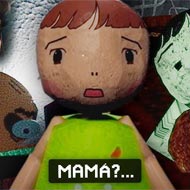
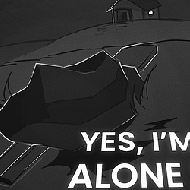
In Family Secrets 1: Empty Plate, you start as Miko with a phone ringing and a mother’s voice on the other end explaining she’ll be away for work, and that single call is the condition everything else in the house depends on. Jun is younger, needs looking after, and the story doesn’t hand Miko any tools beyond the rooms already around him.
Miko and Jun Left to Manage the House
The setup reads as ordinary at first: an older sibling stepping into a caretaker role while a parent is temporarily gone. Family Secrets 1: Empty Plate leans into that ordinariness rather than skipping past it, spending real time on routine tasks before anything unsettling surfaces.
Miko is the character players control throughout, and Jun functions less as a second playable role and more as the reason many of Miko’s choices carry weight. Looking after someone younger, rather than just surviving alone, changes how tense the quiet moments feel compared to a typical solo horror walk.
Players coming in expecting a large cast or a sprawling map tend to recalibrate quickly, since the entire story unfolds inside one home with a tight, linear sequence of events.
Movement, Interaction, and the Flashlight
WASD movement handles all traversal through the house, while E is used to interact with objects and advance or skip dialogue. F toggles the flashlight, which becomes necessary once darker rooms start appearing later in the story, and ESC pauses or resumes the game at any point.
There’s no combat, no inventory system, and no upgrade tree here — the entire interaction model rests on those four inputs, which keeps attention on dialogue and environmental detail rather than mechanical complexity.
The flashlight specifically becomes a small tension mechanic on its own once electrical bills start appearing as a plot point, since players quickly connect a dwindling budget with the possibility of losing light entirely, even though the game uses that anxiety narratively rather than mechanically.
The Phone Call That Starts Everything
Everything in Family Secrets 1: Empty Plate traces back to that opening call. It’s a short scene, but it’s doing a lot of structural work — establishing Miko’s responsibility for Jun, establishing the mother’s absence, and quietly setting up the financial strain that surfaces later through unpaid bills and a father figure under visible pressure.
Players who move quickly through this early scene sometimes miss small dialogue details that pay off later, particularly around how the father is framed before his behavior escalates.
Hiding, the Closet, and the Wallet
One recurring beat involves the two children hiding from an escalating argument, with Miko concealing himself in a closet while clutching a wallet stuffed with cash. That detail — the money kept close during a moment of hiding — recurs as a quiet thread tying the family’s financial trouble to the fear playing out inside the house itself.
The closet itself is worth returning to outside of that specific scene too, since it holds paperwork relevant to the empty plate’s meaning later, tucked in among shelves that reward players who search rather than pass through rooms quickly.
What the Empty Plate Represents
The plate referenced in the title isn’t a puzzle object so much as a recurring image tied to food, care, and what’s missing from the household. Meals come up repeatedly as a stand-in for whether Jun is actually being looked after, and the plate itself becomes shorthand for a household running out of both money and attention.
Jun’s allergy to chocolate is one of the smaller details players reference when discussing how carefully the household’s day-to-day routine is tracked throughout the story, since it resurfaces in more than one scene involving food.
Hide and Seek and the House’s Darker Rooms
A hide-and-seek sequence later in the game is frequently cited as the point where the story’s tone fully tips from tense domestic drama into horror proper. It’s also one of the few sections that asks the player to actively avoid being found rather than simply walk and observe.
Community discussion around this section focuses heavily on the geometry of the room it takes place in, since visibility and hiding spots matter more here than anywhere else in the roughly thirty-to-forty-minute runtime.
Pacing Complaints Players Bring Up
Not every reaction to Family Secrets 1: Empty Plate has been positive. A recurring criticism centers on movement speed — both children walk slowly enough that backtracking through the house feels sluggish, especially during repeated fetch-style objectives that don’t vary much in structure.
Door behavior draws similar criticism. Doors sometimes swing open toward the player rather than away, which a number of reviewers flagged as more frustrating than frightening, particularly during sequences meant to build urgency.
These complaints sit alongside genuine praise for the writing and the claymation-style visual design, and that split is exactly the kind of divide players bring up when comparing this entry to the developer’s earlier project.
How This Story Connects to Bad Parenting: Mr Red Face
Family Secrets 1: Empty Plate draws direct inspiration from Bad Parenting: Mr Red Face, an earlier game covering similar ground around an abusive household. The visual style and general household-horror framing carry over noticeably, though the specific family and events here are their own story rather than a retelling.
Players familiar with that earlier title tend to notice the influence within the first few minutes, particularly in how the game frames a seemingly normal domestic routine as the source of dread rather than any external monster or threat.
How long the game runs is a common question before purchase — official listings put it at roughly thirty to forty minutes for a full playthrough, which fits its structure as a single, focused story rather than a multi-chapter campaign.
Family Secrets 1: Empty Plate gets its tension less from anything supernatural and more from watching Miko manage Jun, the wallet, and an increasingly unstable house with nothing more than a flashlight and the responsibility his mother left behind.